
Remove Mac Apps
A Technical Site Providing Uninstall Tutorial For Mac OS X
- Home
- >>>
- Database
- >>>
- Developer Tools
- >>>
- an object path
How To Uninstall an object path from Mac OS
There are various kinds of software that you can install on your Mac, and it is quite easy to manage those apps on macOS. You can get an app from Mac’s App Store, discs or other websites, and then install it by dragging the app icon to the Applications folder or running the provided installer in the disk image or package file. Once you do not want to keep an app on your Mac, you can uninstall an object path by multiple methods.

Struggling to uninstall unneeded applications from your Mac computer? Having trouble in removing the entire application components around the system? This tutorial will show you how to effectively uninstall an object path in macOS or Mac OS X.
What should you do before uninstalling an object path:
First of all, don’t rush to drag an object path to the Trash. Before you start the uninstallation, you are supposed to quite the app if it is running, otherwise the uninstall may fail or trigger error message. There are several options for you to exit out of an object path:
- (1) Right click on its icon on the Dock, and choose the Quit option;
- (2) Bring an object path to the desktop, and choose Quit option from the Apple menu;
- (3) Launch the Activity Monitor from Dock, Launchpad or Spotlight > type an object path in the search box > select the process pertaining to an object path > click the “X” button on the upper left corner > click Quite in the pop-up dialog (if that fails, choose Force Quite).
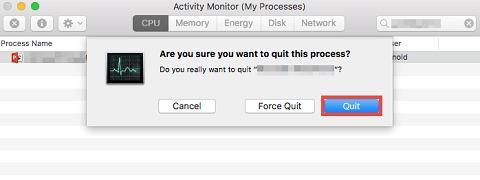
After that you can carry out a clean uninstall either automatically or manually.
Perfectly Uninstall an object path within Simple Clicks
There are many Mac utilities that claim to help hunt down all application files and delete them for you. If you do not want to dig down the system for removing an object path, you can turn to a professional uninstall tool to accomplish the task effortlessly.
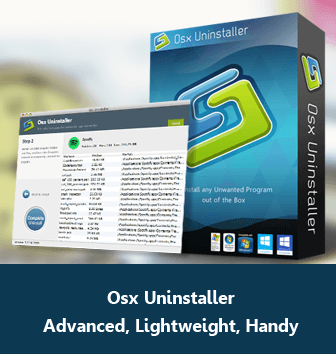
Here we would like to recommend Osx Uninstaller, a lightweight yet powerful app designed for all level users to perfectly remove problematic, stubborn or malicious apps. To completely uninstall an object path and remove its vestiges, you just need to do 3 simple steps: launch > select > uninstall. Take a quick look at how it works.
Video: How to easily & thoroughly uninstall an object path (or other Mac apps)
Step 1: launch Osx Uninstaller
> > Download Osx Uninstaller, install it on your Mac, and click to launch this tool.
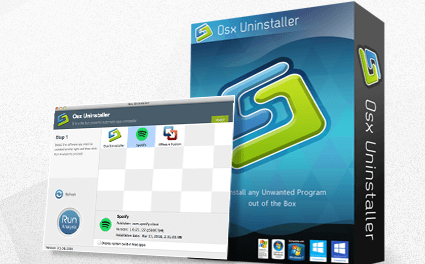
Step 2: choose an object path app
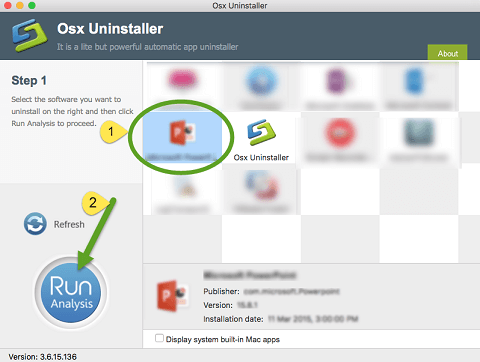
>> Select an object path icon in the interface, and click Run Analysis button to run a scan.
Step 3: perform the uninstall
>> Review the components belonging to an object path that are scanned out, click Complete Uninstall button, and then click Yes in pop-up dialog to uninstall an object path.
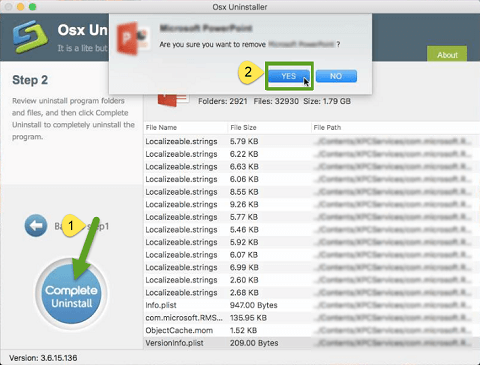
Once the removal is complete, click Back to Interface button to re-scan your Mac. So that’s it. The whole process may last less than one minute to complete. Osx Uninstaller is featured with intuitive interface, streamlined process and powerful engine, which enable all-level users to easily and fully delet an object path from the Mac.
Manual Approaches to Uninstall an object path on Mac
To uninstall an object path without using 3rd party tool, you can adopt the conventional means. Besides, if you do not log in as an administrator user, you will be prompted to enter an administrator’s name and password when trying to delete an app by the steps below.
For the apps installed from Mac’s App Store:
- Click the Launchpad icon on the Dock, and then type an object path in the Search box.
- As the target app appears, position the pointer over its icon, then press and hold until the icon starts to jiggle. And click the Delete button appearing in the app icon.
- Click Delete in the pop-up dialog to confirm the uninstallation of an object path.
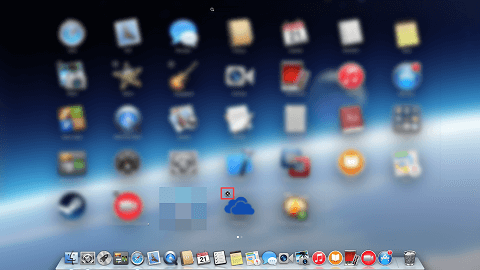
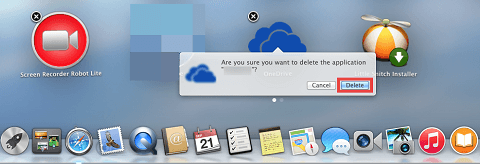
If you want to reinstall the app, just launch App Store and install it again from there. No Delete button showing on the app icon? It means you can not uninstall an object path through Launchpad. Below are two additional uninstall approaches you can adopt.
For the apps not installed through App Store:
- Open the Finder on your Mac, and click on the Applications folder on the sidebar.
- Search and locate an object path in the Applications folder, then drag its icon with your mouse to the Trash icon (located at the end of the Dock), and drop it there.
- Right click on the Trash, choose Empty the Trash, and click on Empty Trash again.
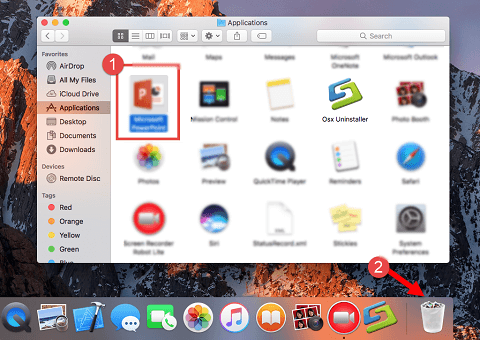
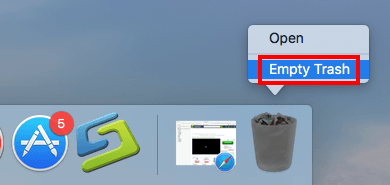
There are other options to uninstall an object path from Applications folder: (1) right click on an object path, and choose Move to Trash option from the contextual menu; (2) select an object path, head to the File menu on the top bar, and choose the Move to Trash option.
Warning: once you empty the Trash, all the things inside including an object path will be permanently deleted from your Mac, and the act is irrevocable. So make sure that you have not mistakenly placed any files in the Trash before carrying out the empty step. As for emptying the Trash, you can also choose File menu > Empty Trash option.
For the apps coming with dedicated uninstaller:
It should be pointed out that, some large software that are integrated deeply with macOS may be hard to get rid of by the aforementioned methods. Luckily that kind of applications usually come with a dedicated uninstaller to help users effectively uninstall the main app as well as associated plugins, files, or bundled software.
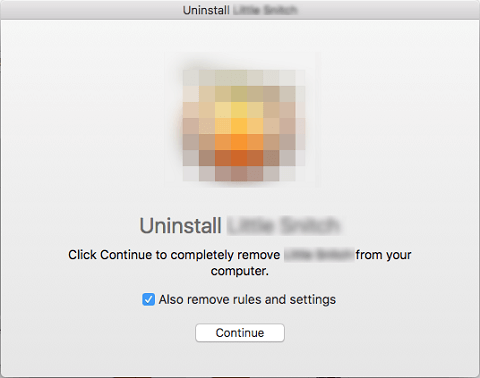
When you locate an object path in the Finder and find it is in a folder, then scroll through the application’s folder to check if it comes with the dedicated uninstaller. If there is an application with the name of Uninstall, just double click to launch the specialized uninstaller, and follow the onscreen instructions to complete the removal of an object path.
If you are still no sure how to uninstall an object path properly, you may visit its official website and look for downloadable uninstaller or uninstall instructions there.
How to Manually Delete an object path Leftovers
Most applications do not run background processes or change system settings files, and their preferences and support files left after the uninstallation may not do much harm to your system. However, for the large, problematic, or malicious software, you may need to clear up the associated components scattered around macOS after you uninstall an object path. If you are trying to remove corrupted components, reinstall an object path, or reclaim disk space, it becomes necessary to remove all the items pertaining to an object path.
an object path components include the app itself, preferences files, supporting plugins, bundled program and sometimes kernel extensions. To fully detect those remaining files, there are two locations (/Library and ~Library) you can explore on drive. The first is at the top level of the hard drive and the second is inside your Home folder.
Delete an object path components in /Library
- Open the Finder, head to the Menu Bar, and select Go > Go to Folder…
- Type the path of the top level Library on hard disk: /Library, and hit Enter key.
- In the following set of folder locations, search for the items whose names contain the keyword(s) of an object path or its vendor: /Library, /Library/Caches, /Library/Preferences, /Library/Application Support, /Library/LaunchAgents, /Library/LaunchDaemons, /Library/PreferencePanes, /Library/StartupItems
- Identify the matched files and folders, and then move them all to the Trash.
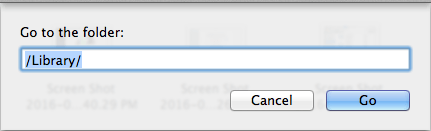
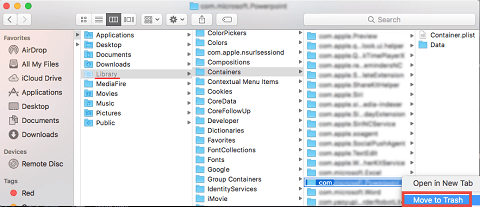
Some of those related items may not be so obvious to find and locate manually. You could do a web search about the exact components and default locations for an object path. Experienced users can utilize the Terminal app to seek out and remove app fragments.
Remove an object path components in ~/Library
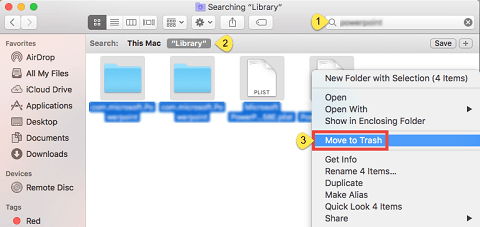
- Go ahead to open up the user library inside home folder: ~/Library.
- Type the keywords of an object path in the Search Bar, and then click on "Library" button.
- Identify matched items in results, right click on them and choose Move to Trash.
- Empty the Trash after deleting all an object path remnants. If you are prompted that an item is “in use and cannot be deleted”, reboot your Mac and try to empty the Trash again.
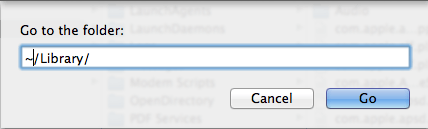
Notice: Before removing files or folders in search results, make sure to identify the accurate components of an object path, because mistakenly deleting other apps’ files (or system settings files) may trigger malfunction of affected apps or even your system.
Manually detecting and deleting an object path remnants could be risk-taking, time-wasting and low-efficient. We notice that many Mac user have difficulties in tracking down the an object path vestiges, and also the final result of uninstallation may not be so satisfying as expected. Incomplete/unsuccessful uninstallation often happens especially when you are tackling corrupted, stubborn, notorious, or malicious applications. If you are looking for a hassle-free way to perfectly uninstall an object path, we highly recommend you to utilize an professional, reputable uninstall tool to handle the task painlessly.
To sum up, this post offers multiple ways to uninstall an object path from Mac computer. Each option has its own advantages and requirements. If you prefer to get rid of an object path smoothly and without any trouble, Osx Uninstaller is undoubtedly a good helper. If you insist on removing an object path on your own, the manual approaches also work well.
Comment